Blog

  • Identifying the genetic basis of large-embryo mutants of barley affected at the Lys3 locus.

    Identifying the genetic basis of large-embryo mutants of barley affected at the Lys3 locus.

    Abstract

    FrederickCooka NathanHughesb CandidaNibaub BeataOrman-Ligezac NicoleSchatlowskic CristobalUauya KayTraffordc

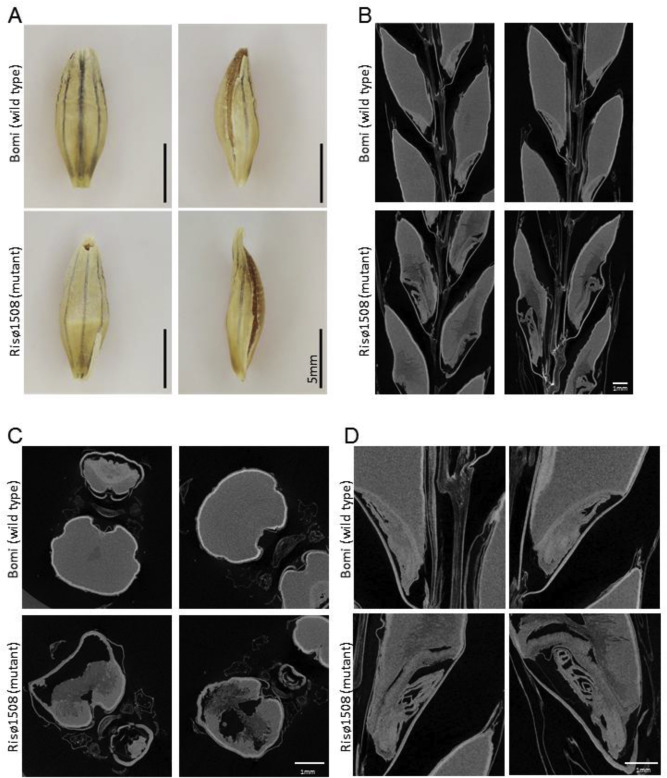
    Many shrunken endosperm mutants of barley (Hordeum vulgare L.) have been described and several of these are known to have lesions in starch biosynthesis genes. Here we confirm that one type of shrunken endosperm mutant, lys3 (so called because it was first identified as a high-lysine mutant) has an additional phenotype: as well as shrunken endosperm it also has enlarged embryos. The lys3 embryos have a dry weight that is 50–150% larger than normal. Observations of developing lys3 embryos suggest that they undergo a form of premature germination and the mature lys3 grains show reduced dormancy. In many respects, the phenotype of barley lys3 is similar to that of rice GIANT EMBRYO mutants (affected in the OsGE gene). However, the barley orthologue of OsGE is located on a different chromosome from Lys3. Together these results suggest that the gene underlying Lys3 is unlikely to encode a starch biosynthesis protein but rather a protein influencing grain development.

    https://doi.org/10.1016/j.jcs.2018.04.013

  • μCT trait analysis reveals morphometric differences between domesticated temperate small grain cereals and their wild relatives

    μCT trait analysis reveals morphometric differences between domesticated temperate small grain cereals and their wild relatives

    Nathan Hughes Hugo R. Oliveira Nick Fradgley Fiona M. K. Corke James Cockram John H. Doonan Candida Nibau

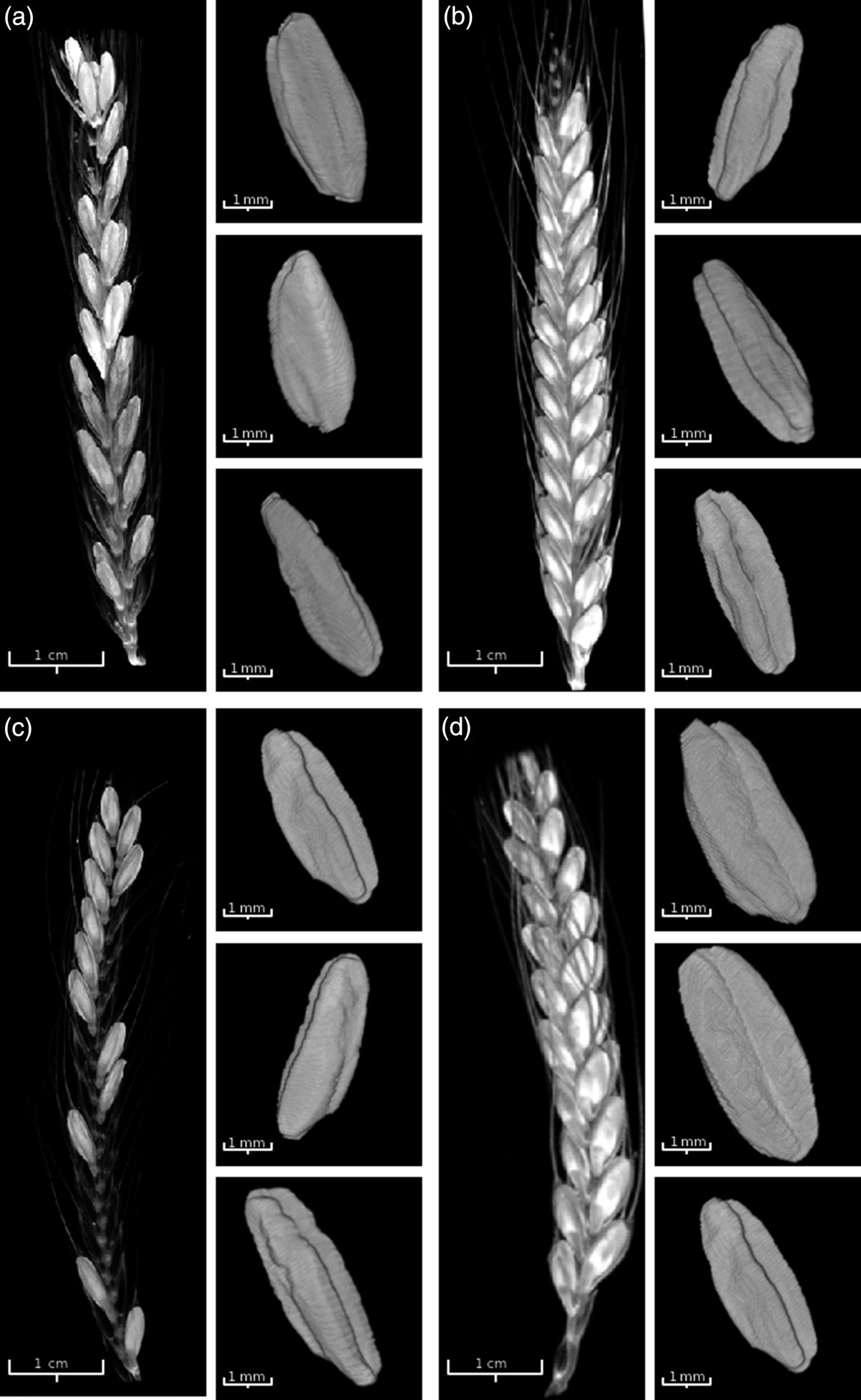
    Wheat and barley are two of the founder crops domesticated in the Fertile Crescent, and currently represent crops of major economic importance in temperate regions. Due to impacts on yield, quality and end‐use, grain morphometric traits remain an important goal for modern breeding programmes and are believed to have been selected for by human populations. To directly and accurately assess the three‐dimensional (3D) characteristics of grains, we combine X‐ray microcomputed tomography (μCT) imaging techniques with bespoke image analysis tools and mathematical modelling to investigate how grain size and shape vary across wild and domesticated wheat and barley. We find that grain depth and, to a lesser extent, width are major drivers of shape change and that these traits are still relatively plastic in modern bread wheat varieties. Significant changes in grain depth are also observed to be associated with differences in ploidy. Finally, we present a model that can accurately predict the wild or domesticated status of a grain from a given taxa based on the relationship between three morphometric parameters (length, width and depth) and suggest its general applicability to both archaeological identification studies and breeding programmes.

    https://doi.org/10.1111/tpj.14312

  • Root imaging showing comparisons in root distribution and ontogeny in novel Festulolium populations and closely related perennial ryegrass varieties

    Root imaging showing comparisons in root distribution and ontogeny in novel Festulolium populations and closely related perennial ryegrass varieties


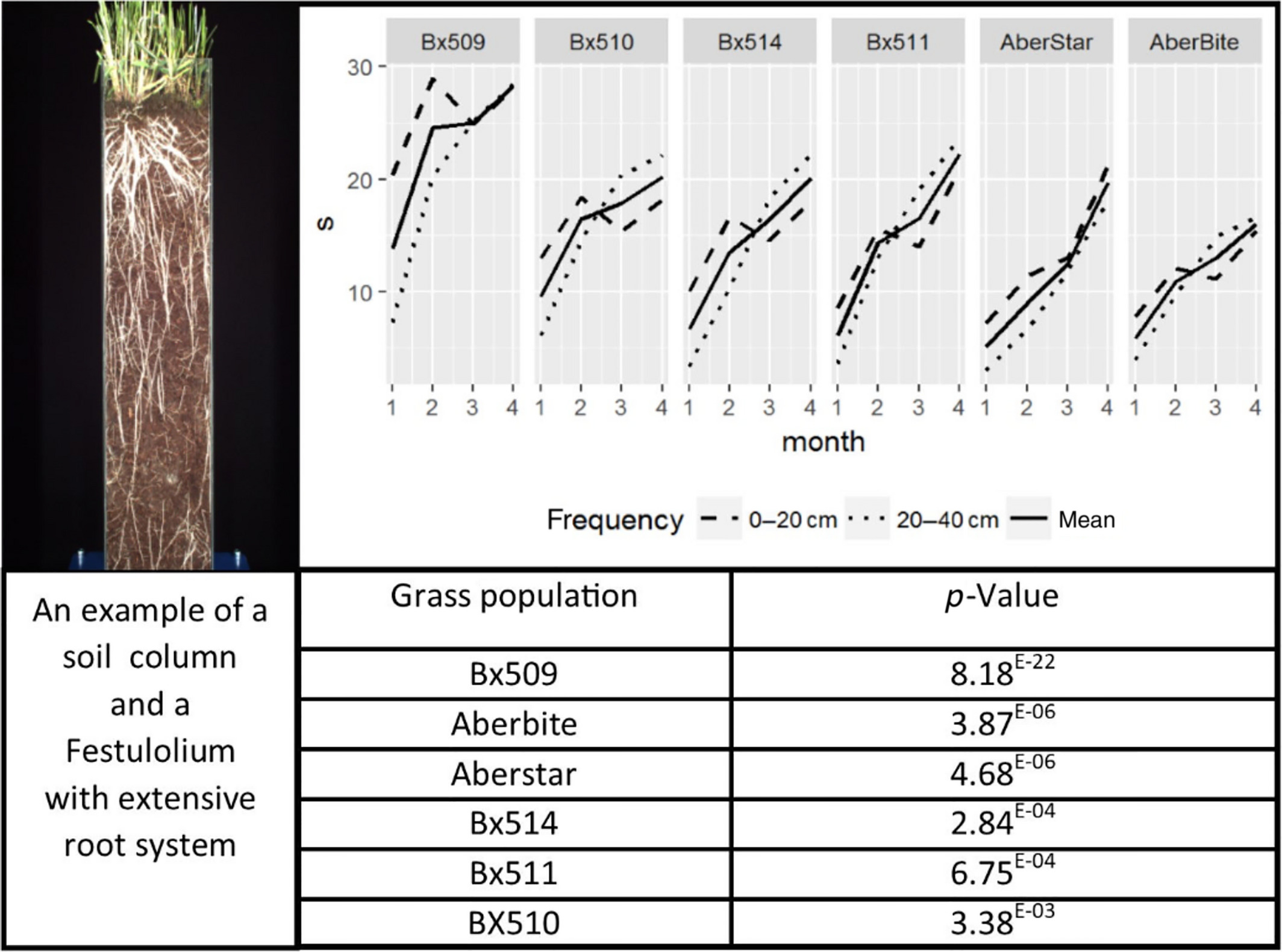
    The incorporation of new sophisticated phenotyping technologies within a crop improvement program allows for a plant breeding strategy that can include selections for major root traits previously inaccessible due to the challenges in their phenotype assessment. High‐throughput precision phenotyping technology is employed to evaluate root ontogeny and progressive changes to root architecture of both novel amphiploid and introgression lines of Festulolium over four consecutive months of the growing season and these compared under the same time frame to that of closely related perennial ryegrass (L. perenne) varieties. Root imaging using conventional photography and assembled multiple merged images was used to compare frequencies in root number, their distribution within 0–20 and 20–40 cm depths within soil columns, and progressive changes over time. The Festulolium hybrids had more extensive root systems in comparison with L. perenne, and this was especially evident at depth. It was shown that the acquisition of extensive root systems in Festulolium hybrids was not dependent on the presence of an entire Festuca genome. On the contrary, the most pronounced effect on root development within the four Festulolium populations studied was observed in the introgression line Bx509, where a single small genome sequence from F. arundinacea had been previously transferred onto its homoeologous site on the long arm of chromosome 3 of an otherwise complete L. perenne genome. This demonstrates that a targeted introgression‐breeding approach may be sufficient to confer a significant improvement in the root morphology in Lolium without a significant compromise to its genome integrity. The forage production of Bx509 was either higher (months 1–3) or equivalent to (month 4) that of its L. perenne parent control demonstrating that the enhanced root development achieved by the introgression line was without compromise to its agronomic performance.

    https://onlinelibrary.wiley.com/doi/abs/10.1002/fes3.145

  • Non-destructive, high-content analysis of wheat grain traits using X-ray micro computed tomography

    Non-destructive, high-content analysis of wheat grain traits using X-ray micro computed tomography

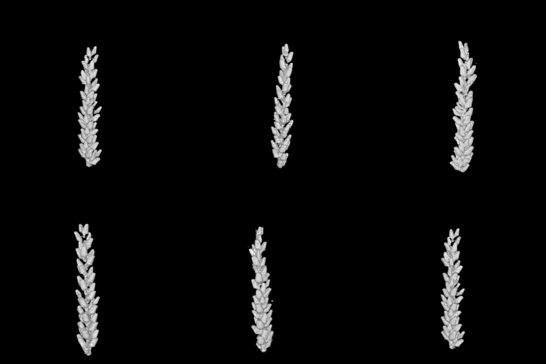
    Wheat is one of the most widely grown crop in temperate climates for food and animal feed. In order to meet the demands of the predicted population increase in an ever-changing climate, wheat production needs to dramatically increase. Spike and grain traits are critical determinants of final yield and grain uniformity a commercially desired trait, but their analysis is laborious and often requires destructive harvest. One of the current challenges is to develop an accurate, non-destructive method for spike and grain trait analysis capable of handling large populations.

  • Modulation of Brassica napus source–sink physiology through film antitranspirant induced drought tolerance amelioration that is dependent on the stress magnitude


    Increase in drought conditions during the oilseed rape (OSR) reproductive phase is predicted to occur more often in the temperate zone, leading to significant yield losses. Crop management solutions such as film antitranspirant (AT) applied at key drought‐sensitive growth stages on both wheat and oilseed rape have recently been shown to alleviate drought‐induced yield losses. However, there is a lack of information regarding potential AT effectiveness to reduce drought damage on OSR plants at different soil moisture regimes. Therefore, two similar experiments were performed in a computer‐controlled glasshouse/phenotyping centre to investigate the physiological responses of OSR to well‐watered (WW), moderate water stress (MWS), water stress (WS) and severe water stress (SWS) conditions. Stress treatments were imposed at the initiation of flowering and treated with an AT or water onto the leaf canopy. Stress limited the gas‐exchange and increased leaf temperature, leaf‐to‐air temperature, bud‐to‐air temperature and ABA concentrations which increased with stress intensity in all tissues analysed. Yield components were significantly reduced by WS and SWS treatments when compared to the WW plants. Application of AT counteracted the detrimental effect of WS and SWS by decreasing water use over the first few days of stress application thus improving relative water content and leaf water‐use efficiency, decreasing ABA accumulation in leaf and all the reproductive organs analysed (buds, flowers and pods) and avoiding bud‐to‐air temperature increases. AT application sustained pod formation and seed production under WS but only seed production under SWS conditions. These data suggest that leaf‐canopy application of AT at key phenological stages under particular magnitudes of soil moisture deficit may sustain OSR reproduction and reduce yield losses.

  • Linking Dynamic Phenotyping with Metabolite Analysis to Study Natural Variation in Drought Responses of Brachypodium distachyon

    Drought is an important environmental stress limiting the productivity of major crops worldwide. Understanding drought tolerance and possible mechanisms for improving drought resistance is therefore a prerequisite to develop drought-tolerant crops that produce significant yields with reduced amounts of water. Brachypodium distachyon (Brachypodium) is a key model species for cereals, forage grasses, and energy grasses. In this study, initial screening of a Brachypodium germplasm collection consisting of 138 different ecotypes exposed to progressive drought, highlighted the natural variation in morphology, biomass accumulation, and responses to drought stress. A core set of ten ecotypes, classified as being either tolerant, susceptible or intermediate, in response to drought stress, were exposed to mild or severe (respectively, 15 and 0% soil water content) drought stress and phenomic parameters linked to growth and color changes were assessed. When exposed to severe drought stress, phenotypic data and metabolite profiling combined with multivariate analysis revealed a remarkable consistency in separating the selected ecotypes into their different pre-defined drought tolerance groups. Increases in several metabolites, including for the phytohormones jasmonic acid and salicylic acid, and TCA-cycle intermediates, were positively correlated with biomass yield and with reduced yellow pixel counts; suggestive of delayed senescence, both key target traits for crop improvement to drought stress. While metabolite analysis also separated ecotypes into the distinct tolerance groupings after exposure to mild drought stress, similar analysis of the phenotypic data failed to do so, confirming the value of metabolomics to investigate early responses to drought stress. The results highlight the potential of combining the analyses of phenotypic and metabolic responses to identify key mechanisms and markers associated with drought tolerance in both the Brachypodium model plant as well as agronomically important crops.

  • Automated estimation of tiller number in wheat by ribbon detection

    Automated estimation of tiller number in wheat by ribbon detection

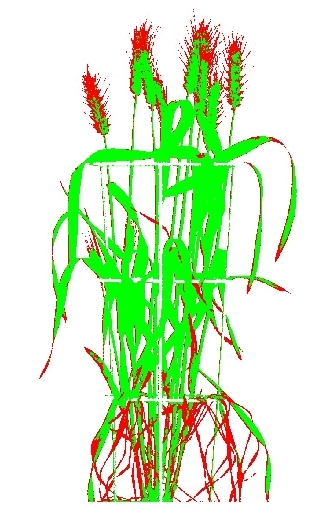
    Abstract: The advent of high-throughput phenotyping installations signals a need for plant biology to use pat- tern analysis and recognition techniques, especially when analysis is done via digital images. Such installations also provide an opportunity to computer vision. We describe one such application at the UK National Plant Phenomics Cen- tre, in which historically measurements have been made in a labour-intensive manual manner. We develop an estimator of tiller number in growing wheat which, when exploit- ing per-day averaging, temporal interpolation and dynamic programming, delivers measurements of finer-grain and no less accuracy than manually, and provides observations on plant treatments hitherto difficult or impossible to obtain. The approach developed lends itself to reuse for any similar imaging setup, and plants with tillering characteristics sim- ilar to wheat. We consider the work a useful exemplar for co-operation between biologists and computer scientists in such installations.

    Click Here

  • Canopy application of film antitranspirants over the reproductive phase enhances yield and yield-related physiological traits of water-stressed oilseed rape (Brassica napus)

    Canopy application of film antitranspirants over the reproductive phase enhances yield and yield-related physiological traits of water-stressed oilseed rape (Brassica napus)

    Canopy application of film antitranspirants over the reproductive phase enhances yield and yield-related physiological traits of water-stressed oilseed rape (Brassica napus)

    Faralli, M., Grove, I. G., Hare, M. C., Boyle, R., Williams, K. S., Corke, F. & Kettlewell, P. S. 18 Jul 2016 In : Crop and Pasture Science. 67, 7, p. 751-765 5 p.

    Abstract:
    Oilseed rape (Brassica napus L.) yield is strongly decreased by water deficit, and crop-management solutions are urgently required considering the emerging difficulties in breeding for drought-tolerant varieties. Film-forming antitranspirants (polymers) are agrochemicals that, applied to the crop canopy, mechanically block the stomata and decrease canopy transpiration. In this study, the drought-protection efficacy of an adaxial-surface application at the flowering stage of two film-forming treatments (poly-1-p-menthene and di-1-p-menthene) was investigated in pot-grown, droughted oilseed rape over two glasshouse experiments. Over the drought period, the two compounds reduced leaf stomatal conductance (P < 0.001), and as the soil moisture deficit increased, they sustained carbon assimilation and improved water-use efficiency with differing efficacy. Following the antitranspirant treatments, ABA concentration in leaves and reproductive organs was severely reduced and this was accompanied by significant improvements in leaf and flower–pod water potential. Drought significantly decreased the seed dry matter production of oilseed rape plants, by 39% on average. The treatments significantly increased seed dry matter by 13% (poly-1-p-menthene) and 17% (di-1-p-menthene), on average, compared with the unsprayed droughted plants, as a result of a significant increase in number of pods per plant, by 11% and 13%, respectively. The results suggest that film-forming compounds may be a useful crop-management tool to avoid severe drought-induced yield losses in oilseed rape by improving water-use efficiency and plant water status, thus alleviating ABA signalling under water deficit.

    link to the paper: http://hdl.handle.net/2160/43813
  • Image-based phenotyping to measure plant diversity and performance

    Image-based phenotyping to measure plant diversity and performance

    Doonan, J., Boyle, R., Han, J., Williams, K. S., Alcalde Barrios, A., Strange, H., Corke, F., Nibau, C., Scotson, C. P., Camargo-Rodriguez, A., Zwiggelaar, R., Sturrock, C. & Mooney, S. 2016

    Abstract:

    At the NPPC, we use both traditional and novel phenotyping strategies that allow detailed measurement of traits across the entire life cycle of crops and model plants and includes conveyor systems for dynamic imaging of small plants (seedlings) and large plants (up to 2m); instrumented hydroponics to assess root function, laser scanning and other 3-D imaging approaches. Image-based physiological measurements can provide insight into plant responses to environmental stresses. End point phenotyping and quality assessment is particularly important for many of our major crops, motivating us to explore novel high resolution methods (for example, based on X-ray Computed Tomography (CT) scanners) to visualize and measure grain characteristics in situ. The abundance and diversity of image based data poses a challenge in terms of extracting accurate trait measurements and/or useful proxies, with minimal human intervention. The presentation will describe examples of computer-assisted measurements aimed at automated trait extraction.